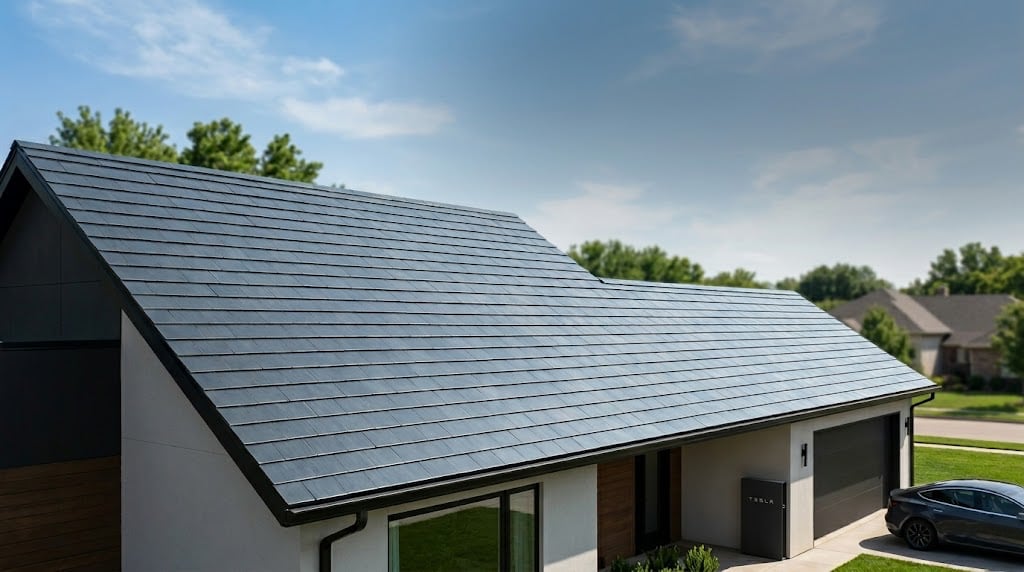
If you live in Oklahoma City, you know the drill: spring arrives, the sirens wail, and your roof takes a beating. For years, the standard answer to storm damage has been a fresh layer of asphalt shingles. But as utility rates climb and electric vehicles become the norm, a new contender has emerged: the Tesla Solar Roof.
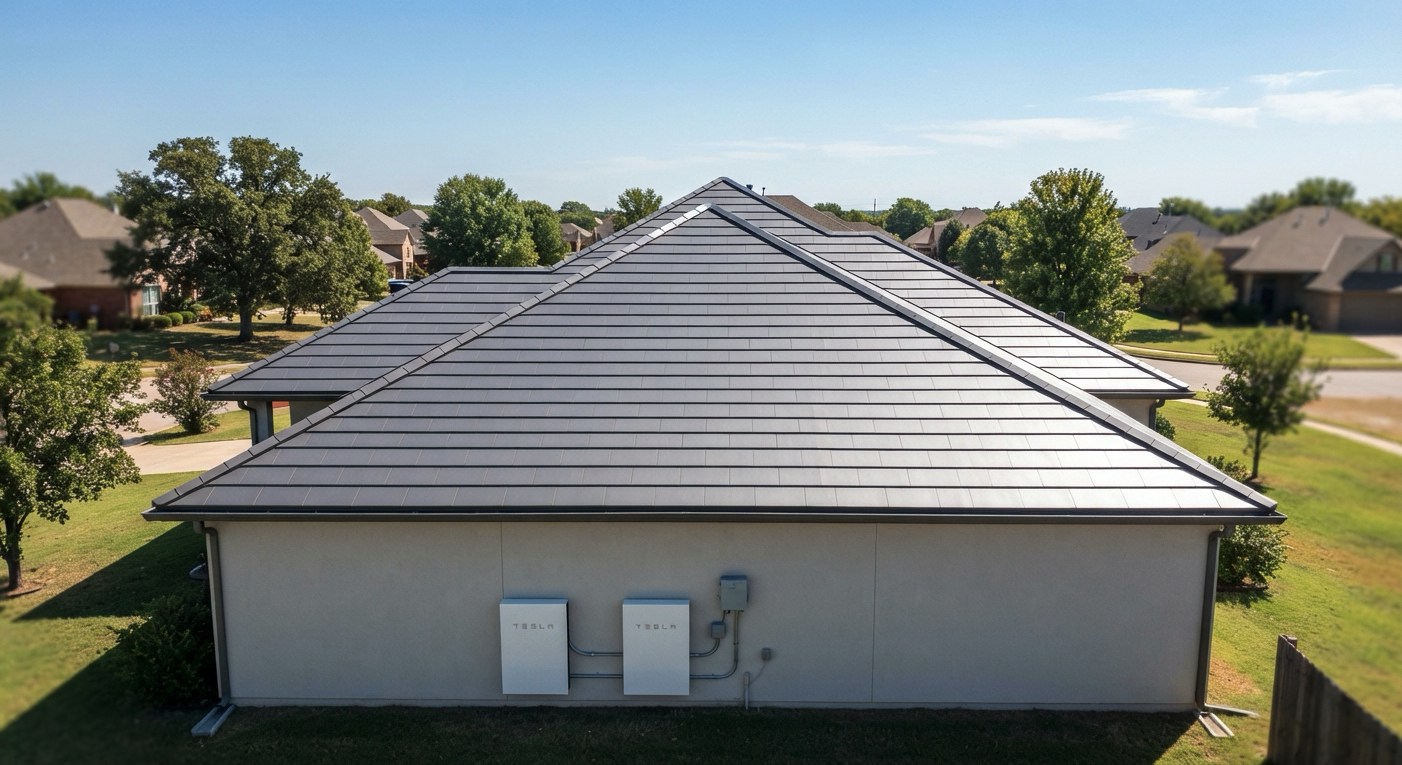
Unlike traditional solar panels—which are bolted on top of your existing shingles—the Tesla Solar Roof is the roof. It’s made of high-strength tempered glass tiles that look like high-end slate or tile but generate electricity. After analyzing 2026 utility data, local tax incentives, and Oklahoma’s brutal weather specs, we’ve determined who this premium product is actually for.
The Verdict: A Premium Shield for the Long-Term Homeowner
The Tesla Solar Roof is a niche, high-end product that makes financial sense only if you already need a roof replacement, plan to stay in your home for 10+ years, and value aesthetics as much as energy independence. While it offers some of the best hail protection on the market, its high upfront cost means it isn't the fastest way to save money on your monthly bill.
The Pros & Cons at a Glance
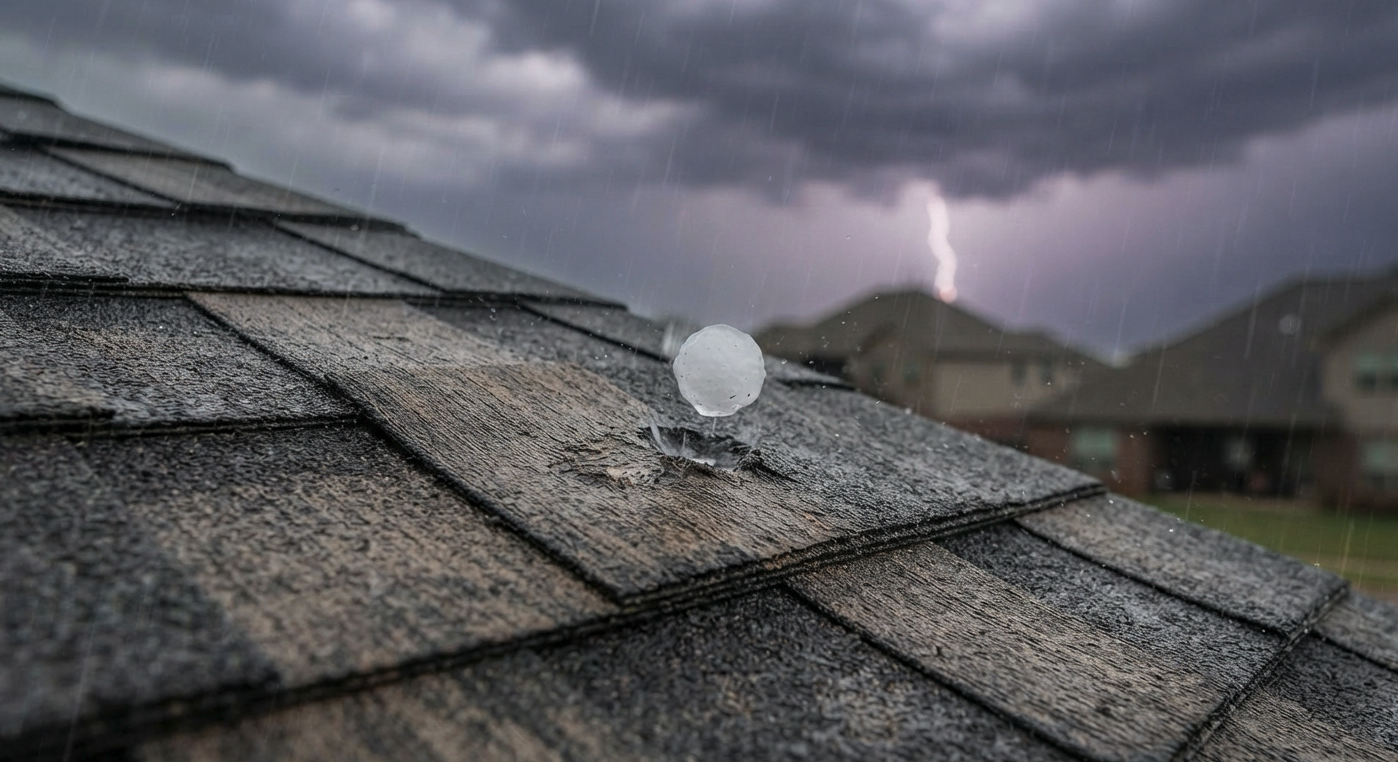
- Pro: Class 4 Hail Rating — This is the highest possible impact resistance. These tiles are designed to survive the golf-ball-sized hail that frequently totals standard Oklahoma roofs.
- Pro: Unmatched Curb Appeal — Unlike bulky panels, this technology is completely integrated. It looks like a high-end designer roof, not a science project.
- Pro: All-in-One Warranty — You get a 25-year warranty that covers the tiles, the labor, and the power production, providing long-term peace of mind.
- Con: Price Tag — The upfront investment is significant, often costing 2–3 times more than traditional solar panels.
- Con: Longer Payback Period — Because Oklahoma City has relatively low electric rates, it takes longer for the energy savings to "pay off" the initial cost.
- Con: Installation Complexity — This isn't a DIY job or a task for a standard roofer; it requires a specialized Certified Installer.
Who It’s For & Who Should Skip It
- The "Needs a New Roof" Homeowner: If your insurance is already covering a portion of a roof replacement due to storm damage, the "upgrade" cost to Tesla Solar becomes much more palatable.
- The Storm-Weary: If you’re tired of replacing asphalt shingles every 5–7 years, the tempered glass and steel construction offers a "once-and-for-all" durability that traditional materials can't match.
- The EV Enthusiast: If you have electric cars in the garage, your "fuel" costs are now tied to your electric bill. Offsetting that with solar is a powerful hedge against future utility rate hikes.
- The Budget-Conscious (Skip): If your only goal is to lower your electric bill as cheaply as possible, traditional solar panels are significantly more cost-effective than the full roof system.
- The Short-Timer (Skip): If you plan to move in 3–5 years, you likely won't recoup the premium investment in home resale value before you hand over the keys.
The Real-World Math: Oklahoma City (2026)
Oklahoma has some of the cheapest electricity in the country (roughly $0.12/kWh), which is great for your wallet but makes for slower solar "payback" math.
- The Federal Tax Credit: You can still claim the 30% Federal Residential Clean Energy Credit on the entire cost of the solar-active portion of the roof and any accompanying Powerwalls.
- Energy Savings: The average OKC household spends about $200/month on power. A Tesla Solar Roof can potentially wipe this out, but because our rates are low, it can take 15–20 years to break even on the solar premium alone.
- Property Tax Perk: In Oklahoma, the value added by a solar system is generally exempt from property tax assessments—meaning you get the luxury upgrade without the tax penalty.
The "Oklahoma Hail" Test
We looked at the technical specs for the Tesla Solar Roof regarding our state’s biggest threat.
- Hail Rating: Class 4. In testing, these tiles survived 1.75-inch hailstones (golf ball size) fired at 70 mph.
- Wind Rating: Class F (up to 166 mph), which is higher than what most standard shingles can handle without lifting.
- The "Bruise" Factor: Unlike asphalt, which "bruises" and loses granules during hail (leading to invisible leaks), tempered glass either stays intact or breaks visibly. This makes post-storm inspections much more straightforward.
How We Evaluated
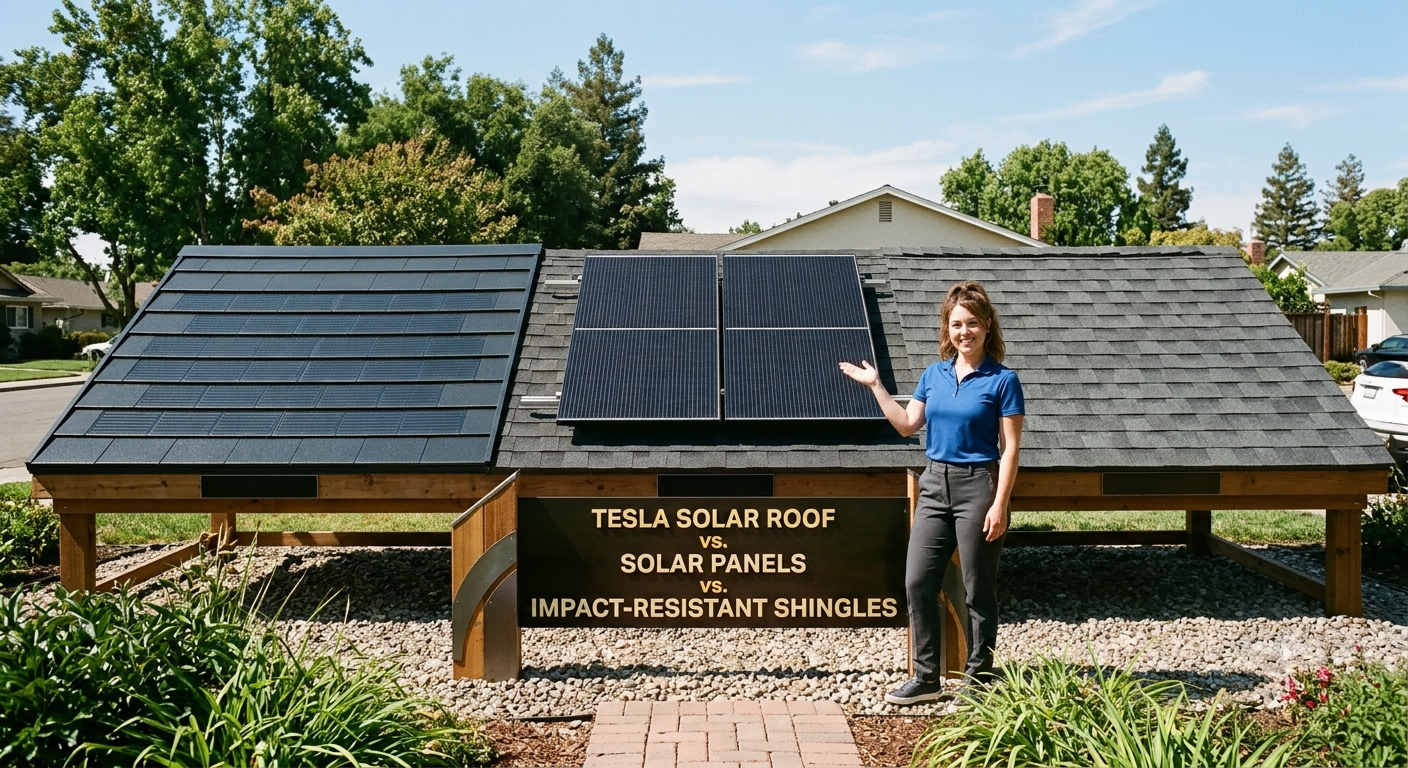
We compared the Tesla Solar Roof against premium impact-resistant shingles and traditional monocrystalline solar panels. We factored in the 2026 Oklahoma utility rate increases and the current 30% federal tax credit landscape to provide a realistic look at the total cost of ownership.
Ready to see if your roof qualifies? You can check your home's specific solar potential and get a local estimate through TaylorMade Exteriors, a certified installer in the OKC metro.