Tesla Solar Roof vs. Solar Panels vs. Impact-Resistant Shingles: Which Is Right for Your Home?
Three very different ways to protect your roof and cut your power bill — here's how they actually compare for Oklahoma weather, budgets, and timelines.
Three Roofs, Three Very Different Bets
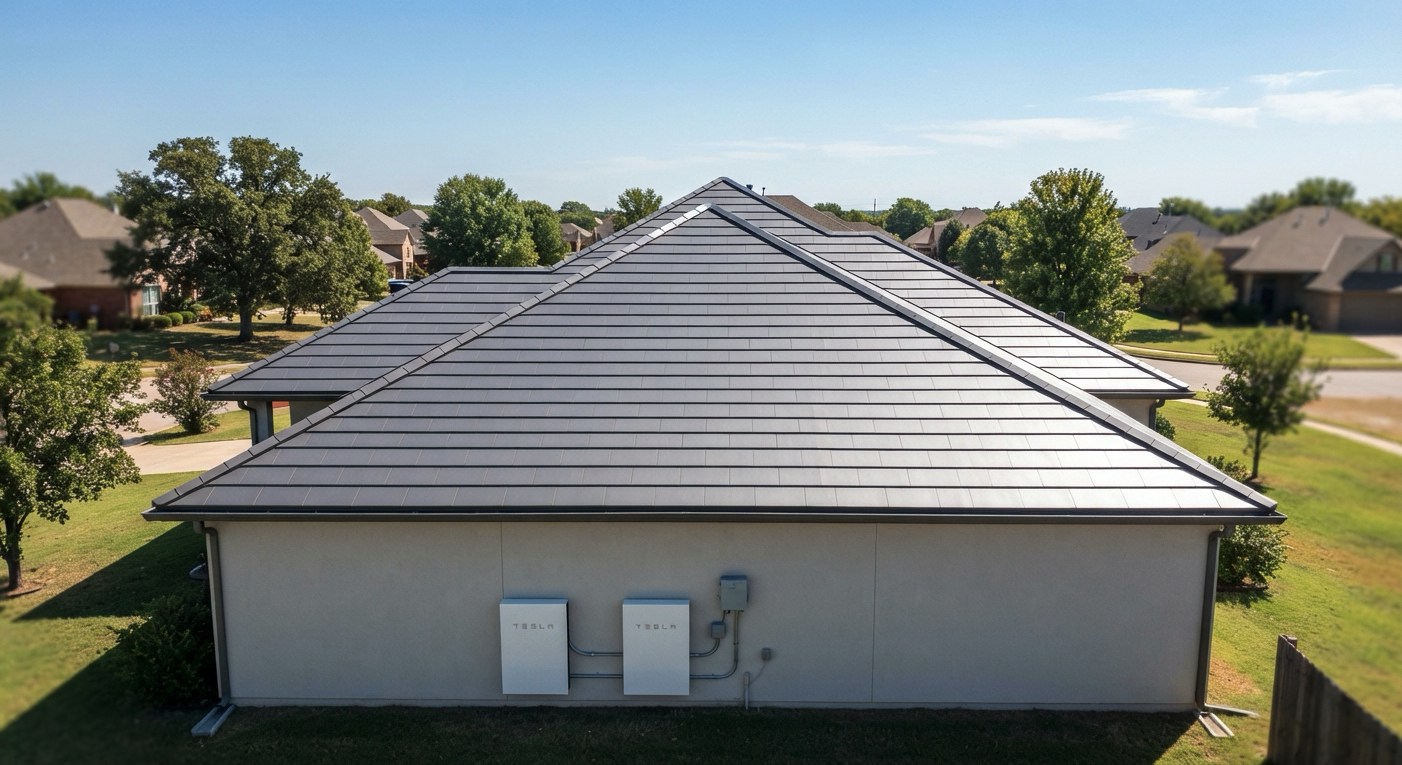
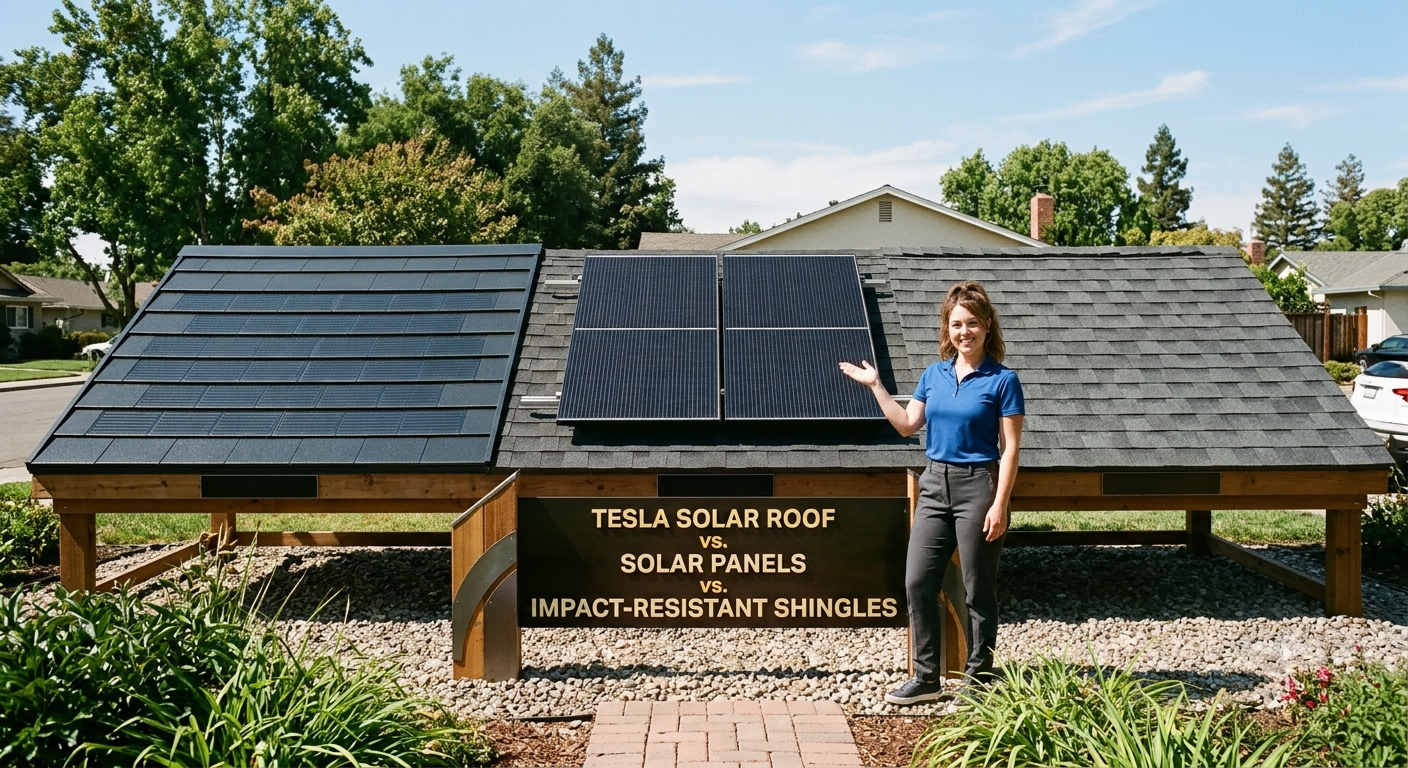
If you're re-roofing in Oklahoma, you're no longer just picking a shingle color. You're deciding between three fundamentally different products: a Tesla Solar Roof that generates power and replaces your roof entirely, traditional solar panels mounted on top of a standard roof, or impact-resistant shingles built to survive hail without producing a single watt of electricity.
Each one solves a different problem. This guide lines them up side by side so you can see where your money actually goes.
Quick Comparison
| Tesla Solar Roof | Traditional Solar Panels | Impact-Resistant Shingles | |
|---|---|---|---|
| What it is | Solar tiles that replace your roof surface entirely | Panels mounted on racking above an existing roof | Class 4-rated shingles designed to resist hail impact |
| Generates power | Yes | Yes | No |
| Replaces the roof | Yes — it is the roof | No — sits on top of the existing roof | Yes |
| Upfront cost | Highest | Moderate | Lowest of the three |
| Best fit | Homeowners re-roofing anyway who want a seamless, all-in-one system | Homeowners with a roof that still has years of life left | Homeowners who want maximum hail durability without a solar investment |
| Hail performance | Engineered and tested for hail impact | Panels rated for hail; underlying roof may still be vulnerable | Built specifically for hail resistance (Class 4) |
| Visual profile | Low profile, blends into roofline | Visible panels and racking on roof surface | Looks like a standard shingle roof |
| Ongoing energy savings | Yes | Yes | No |
| Federal tax credit eligible | Yes | Yes | No |
The core trade-off: Solar Roof and solar panels both cut your energy bill; impact shingles don't. But if your existing roof still has plenty of life left, paying to replace it just to add solar rarely pencils out — that's when panels-on-existing-roof usually makes more sense.
The Case for Each Option
You're re-roofing and want it all in one project
Makes the most sense when your roof needs replacing anyway. You get a new roof and a power system installed as a single, integrated job instead of two separate projects stacked on top of each other.
Your roof still has years left in it
If your shingles are mid-life and structurally sound, mounting panels on top captures the energy savings without paying to tear off a roof that doesn't need replacing yet.
Hail resistance is the priority, not energy production
Some homeowners simply want the toughest possible roof and would rather handle energy savings separately, or not at all. Class 4 shingles solve for durability and can also mean a homeowners insurance discount in Oklahoma.
Why Hail Rating Matters More Here Than Almost Anywhere
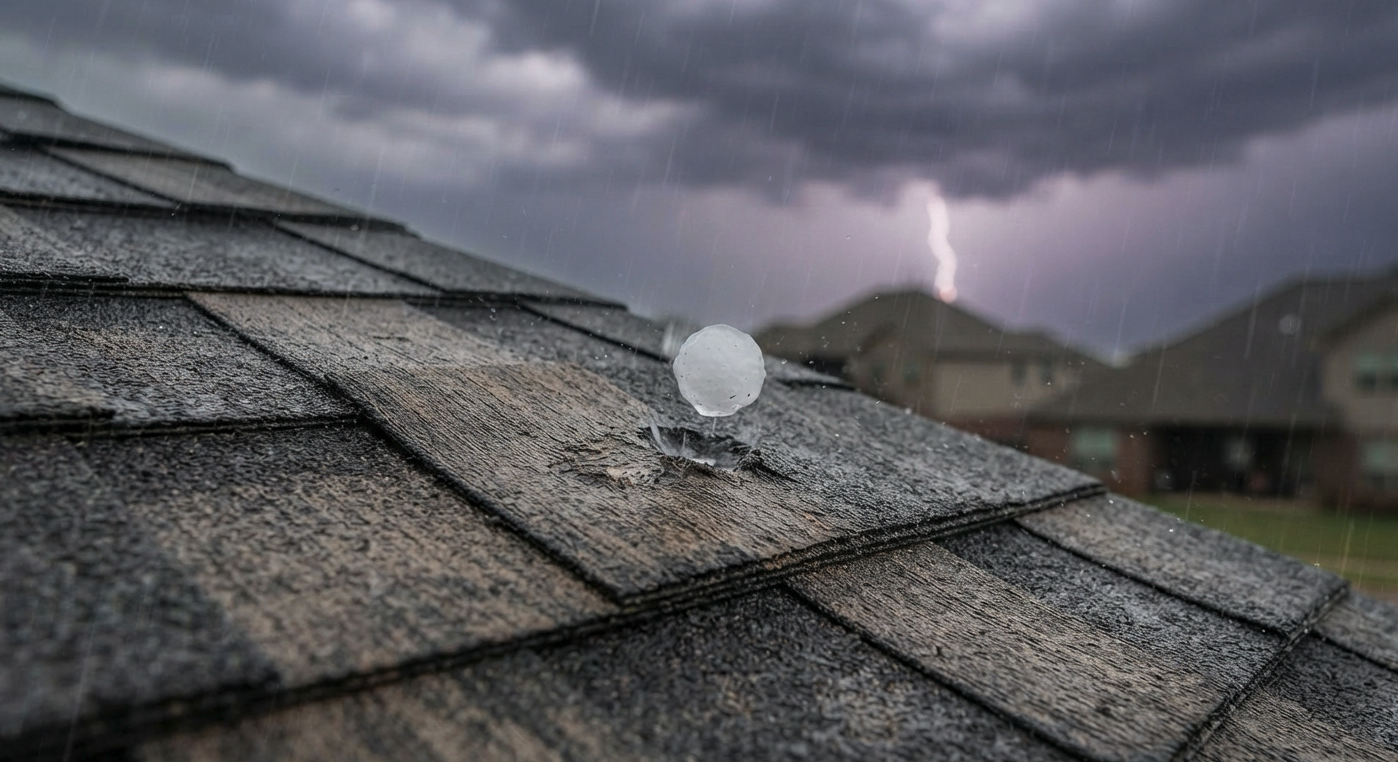
Oklahoma sits inside one of the most active hail corridors in the country. That single fact should weigh heavily in this decision no matter which direction you lean. A Solar Roof and Class 4 impact shingles are both built with hail in mind; standard three-tab shingles and older panel-mounting systems are not necessarily tested to the same standard, so it's worth asking directly about impact ratings for any product you're comparing.
Cost Over Time, Not Just Upfront
Sticker price only tells part of the story. Impact shingles cost the least to install but never generate savings on your power bill. Solar panels cost more upfront but typically pay themselves back through reduced energy costs over time. A Solar Roof costs the most initially but replaces two expenses — a new roof and a solar system — with one project, and it also qualifies for the same federal solar tax credit as traditional panels.
The right way to think about it isn't "which is cheapest," but "which expense was I already going to have, and which of these turns that expense into savings."
Frequently Asked Questions
Can I put traditional solar panels on impact-resistant shingles?
Yes. Impact-resistant shingles and solar panels aren't mutually exclusive — many homeowners choose Class 4 shingles specifically because they want a durable base roof and plan to add panels on top, either now or later.
Does the Tesla Solar Roof cost more than shingles plus panels combined?
It depends on your roof size and energy needs. Because the Solar Roof combines roofing and power generation into a single integrated product, the fairest comparison is against the combined cost of a full roof replacement plus a separate solar panel installation — not against shingles alone.
Will impact-resistant shingles lower my insurance premium?
Many Oklahoma insurers offer discounts for Class 4 impact-resistant roofing, though the specific savings vary by carrier. It's worth asking your insurance agent directly once you know which product you're installing.
What if my roof is only a few years old — do I need to replace it for solar panels?
No. Traditional solar panels are designed to mount on an existing roof structure without requiring a full replacement, as long as the roof is structurally sound and has enough remaining life to outlast the panel installation.
Not Sure Which Option Fits Your Roof?
As a licensed Tesla Solar installer and Oklahoma roofing specialist, TaylorMade Exteriors can walk your roof and lay out real numbers for all three paths — no pressure, just a straight comparison for your home.
Get Your Free Roof & Solar Assessment