Shade is nice. A roof full of debris, moss, and cracked shingles is not.
There's a reason mature trees are one of the first things people notice about a beautiful property. They cool your yard in the summer, add curb appeal, and can even lower your energy bills. But when a tree grows too close to your home, that same beauty can quietly turn into one of the most common and most overlooked threats to your roof.
Here in Oklahoma, where we deal with everything from high winds and hailstorms to ice events and summer thunderstorms, a poorly positioned tree can turn ordinary weather into a roofing emergency. Let's break down exactly how trees cause damage, what to watch for, and when it's time to call in a professional.
Overhanging Branches Cause More Damage Than You'd Think
Even branches that look harmless can do real damage over time. Constant rubbing from wind wears away shingle granules, which are your roof's first line of defense against UV rays and moisture. Once those granules are gone, shingles age faster and become more prone to leaks.
Real-world scenario: A single overhanging limb, swaying in the wind for a full season, can strip enough granules to shave years off a shingle roof's lifespan – all without a single storm involved.
Falling Limbs and Storm Damage
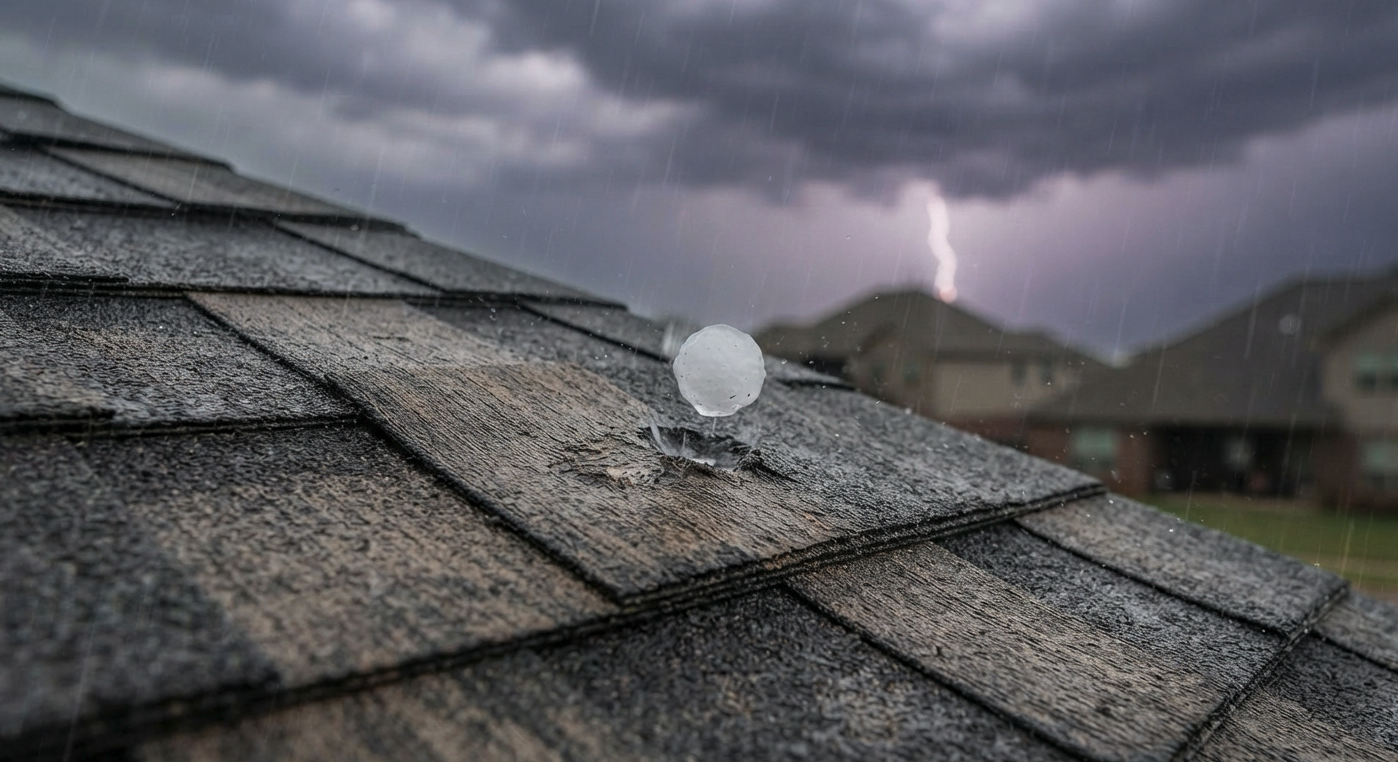
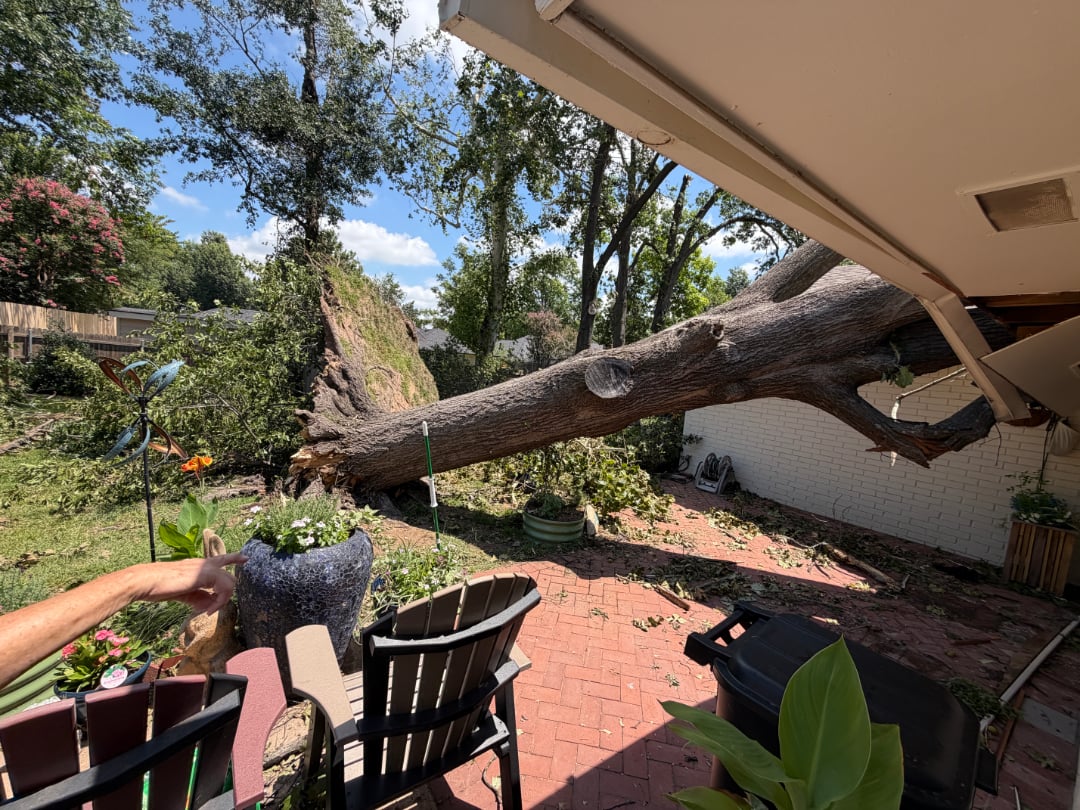
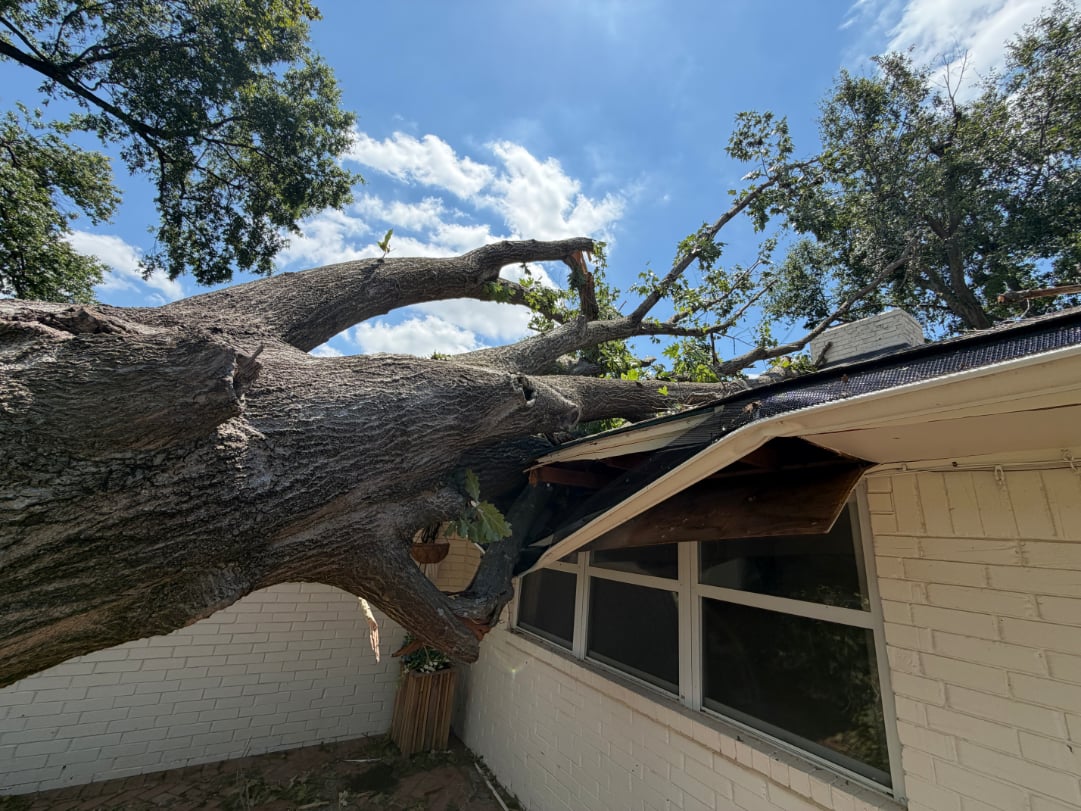
Oklahoma's severe weather season doesn't discriminate between healthy trees and weak ones. High winds, ice accumulation, and hail can snap even sturdy branches, and a limb falling from height can crack shingles, dent flashing, or in worse cases, puncture the roof deck entirely.
• Large branches directly over the roofline pose the highest risk
• Dead or diseased limbs are far more likely to break in a storm
• Trees with shallow root systems are more prone to toppling in high wind
Leaves, Needles, and Debris Buildup
Even if a tree never drops a branch, its everyday debris can cause slow, expensive problems. Leaves and pine needles collect in valleys and gutters, trapping moisture against your shingles. Over time, this creates the perfect environment for:
• Moss and algae growth, which retains moisture and degrades shingles
• Clogged gutters, leading to water backing up under the roofline
• Wood rot on the fascia and roof deck from prolonged dampness
Roots Can Undermine More Than Just the Lawn
It's not just the branches you need to worry about. Aggressive root systems from trees planted too close to the foundation can shift soil, disrupt drainage, and in some cases affect the structural stability of the home itself, indirectly stressing the roofline and gutter system.
How to Protect Your Roof
• Trim regularly: Keep branches at least 6–10 feet away from the roofline.
• Inspect after storms: Check for new debris, cracked shingles, or bent flashing after high winds.
• Clean gutters seasonally: Especially in fall, when leaf drop is heaviest.
• Watch for warning signs: Leaning trees, exposed roots, or dead limbs near the house should be addressed before storm season.
• Schedule a professional roof inspection: An annual check can catch small issues before they become expensive repairs.
Frequently Asked Questions
Q: How close is too close for a tree to be near my roof?
As a general rule, branches should be trimmed back at least 6–10 feet from the roofline. For larger trees, an arborist can advise on safe root and canopy distances based on the tree's mature size.
Q: Can tree damage void my roof's warranty?
Possibly. Many manufacturer warranties require reasonable maintenance, and unaddressed overhanging branches or debris buildup can be considered a maintenance failure if damage occurs.
Q: Should I remove a tree that's close to my house?
Not always – a certified arborist can often recommend trimming or root management as an alternative to full removal. Removal is usually reserved for trees that are diseased, structurally unstable, or planted dangerously close to the foundation.
Q: My roof already has moss growing on it. Is that serious?
Moss retains moisture against the shingle surface, which accelerates wear and can lead to leaks over time. It's worth having a roofing professional assess the extent of the damage before it spreads further.
Not Sure If Your Roof Has Tree-Related Damage?
Our team can inspect your roofline, gutters, and flashing to catch problems before they turn into costly repairs. Schedule a free roof inspection at taylormadeexteriors.com/contact.
TaylorMade Exteriors – Proudly serving Oklahoma homeowners with expert roofing, fencing, and solar solutions.